The Challenge
Declining national science scores among elementary students highlight the need for innovative approaches that build both content knowledge and essential 21st-century skills like critical thinking, collaboration, and problem-solving. SPACE-IT addresses this need by boosting students’ science self-efficacy and achievement through research-based strategies that develop a key, yet often overlooked, foundation for success in STEM: spatial thinking.
The Client
U.S. Department of Education
What We Did
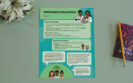
AnLar developed the SPACE‑IT program and designed a rigorous, multi-year research study to evaluate its impact on both teachers and students. SPACE-IT is the first-of-its-kind professional development + coaching program that empowers 5th‑grade teachers to infuse hands-on, spatial thinking strategies into everyday science instruction. Spatial thinking is a critical but often-overlooked skill set that strongly predicts success in STEM disciplines. Research shows that improving spatial skills actually boosts student outcomes in STEM, including science achievement. In Year 1, we created a full set of professional learning materials for coaches and teachers, including coaching protocols and a spatially enhanced science curriculum. In Year 2, we conducted focus groups with teachers and coaches to gather formative feedback on the usability and feasibility of the program components. Year 3 focused on recruiting and training coaches and teachers and conducting a feasibility study to refine implementation. In Year 4, we launched a cluster randomized controlled trial involving 25 teachers and 1,215 fifth-grade students to assess the impact of the program on teachers’ knowledge, skills, and classroom practices, as well as on students’ spatial thinking skills, attitudes toward science, and science achievement. Read about what the SPACE-IT program was like in practice through this NSTA blog.
Skills Used
- Educator workforce training and professional development
- Needs assessments with schools
- Randomized controlled trial design
- Instrument/protocol development and testing
- Survey administration
- Quantitative data analysis
- Writing and dissemination
Service Areas
Research & Evaluation