The Challenge
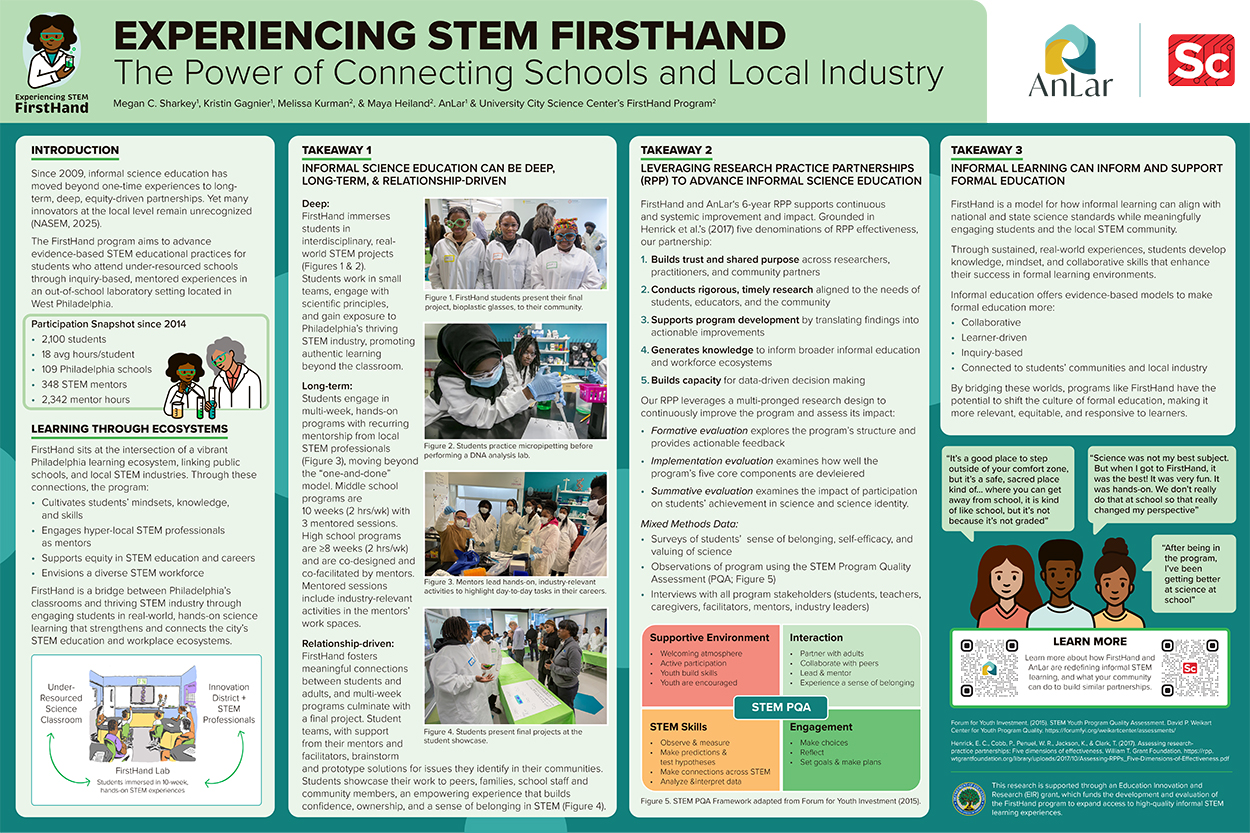
Many students lack access to experiences in science that feel inspiring, fun, or that make people feel like they want to ‘do science.’. This is true for kids, and especially true in communities that have faced historical segregation and lack of funding. When schools are underfunded, it can be challenging to provide interesting, hands-on science experiences that make learning fun and engaging. This project explores whether an informal STEM program can help students who historically do not go into STEM fields, feel like they belong in science, are capable of achieving in STEM, and see its value.
The Client
University City Science Center
What We Did
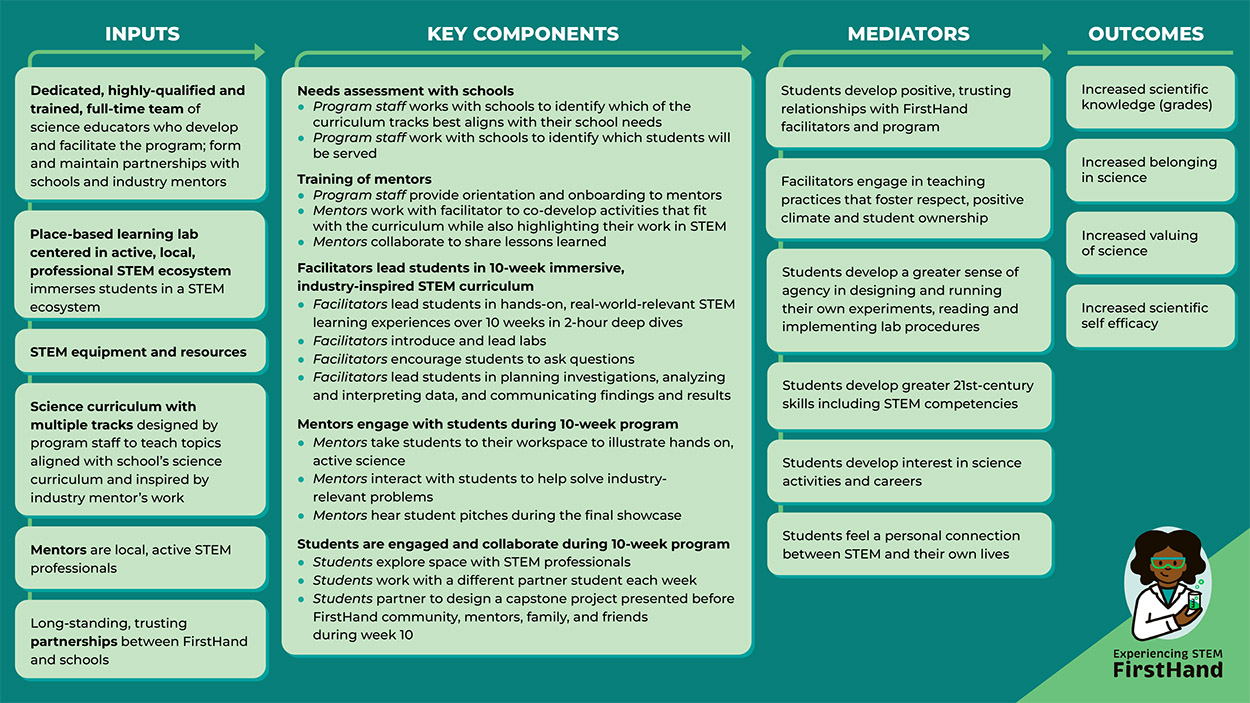
AnLar engaged in a research-practice partnership with the FirstHand team to conduct a multi-year evaluation of the program’s out-of-school STEM learning experiences. We provided formative and summative data to support continuous program improvement. Our mixed methods analysis included student surveys and focus groups, interviews with program staff and mentors, participation data analysis, and observations using the STEM Program Quality Assessment (STEM-PQA). We collaborated with program leaders to develop a logic model that aligns program activities with intended short- and long-term outcomes. Findings from the evaluation have informed publications and presentations that highlight FirstHand’s impact on student engagement, STEM identity development, and interest in STEM careers.
Skills Used
- Evaluation design
- Logic model development
- Implementation evaluation
- Randomized controlled trial
- Instrument development
- Data collection
- Quantitative data analysis
- Qualitative data analysis
- Continuous quality improvement
- Implementation science
Service Areas
Research & Evaluation